- the course guide
- access to teaching slides
- recorded learning in each section
- plus downloadable pdf resources
- a list of helpful further reading
- access to exclusive Q&A content
- a space for reflective note-taking
- final exam and certificate
- Accreditation code for The Farm Carbon Calculator →
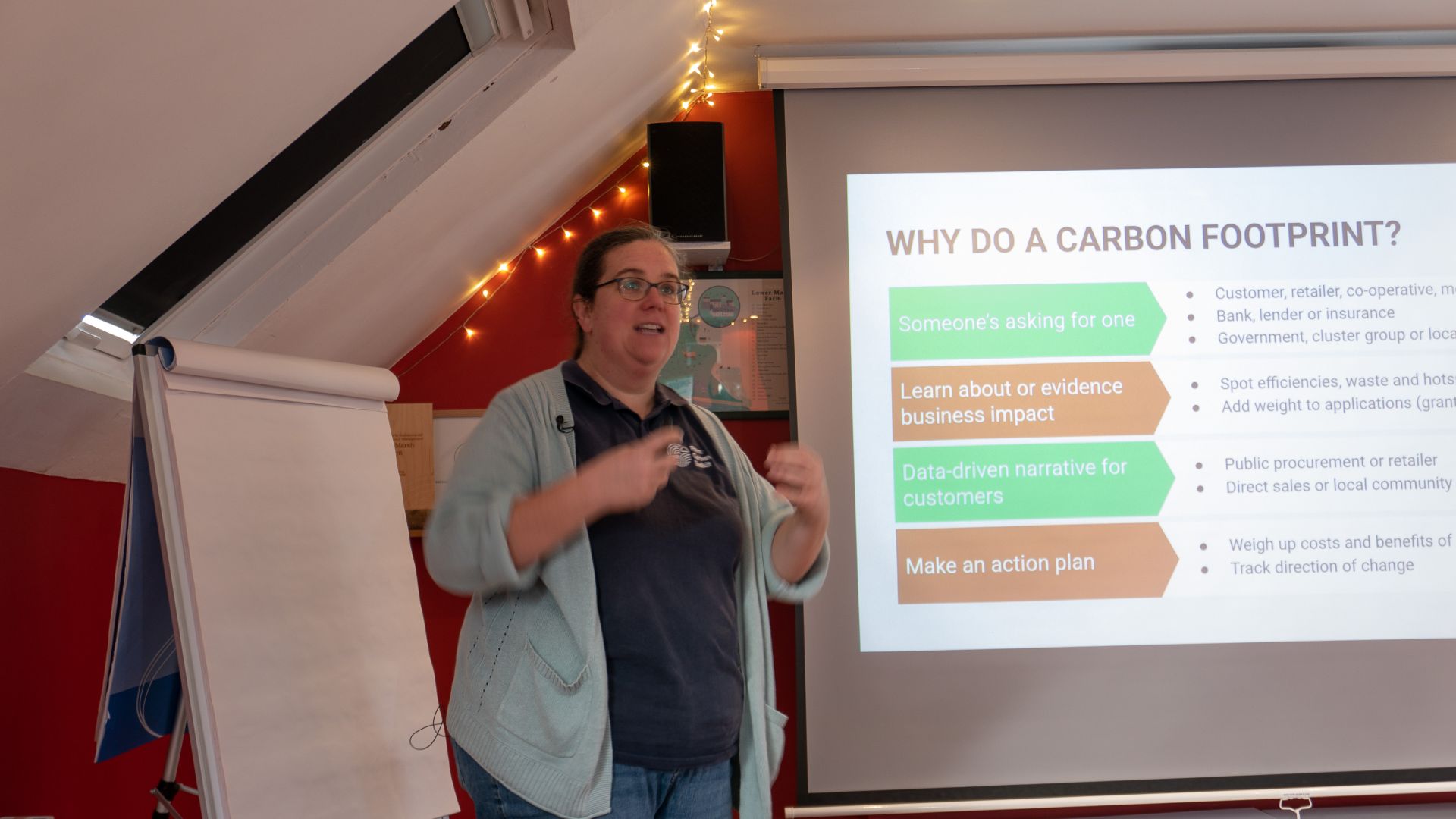
This opening session establishes the "why" behind carbon footprinting, moving beyond simple compliance to look at business resilience. We define the core science of climate change, specifically focusing on the "big three" agricultural gases - carbon dioxide, methane, and nitrous oxide - and where they originate on a holding. Learners will explore the "Scope" framework to understand the difference between direct emissions from machinery and indirect emissions from purchased inputs.
Key Focus: Understanding the business drivers and the scientific definitions of Net Zero.
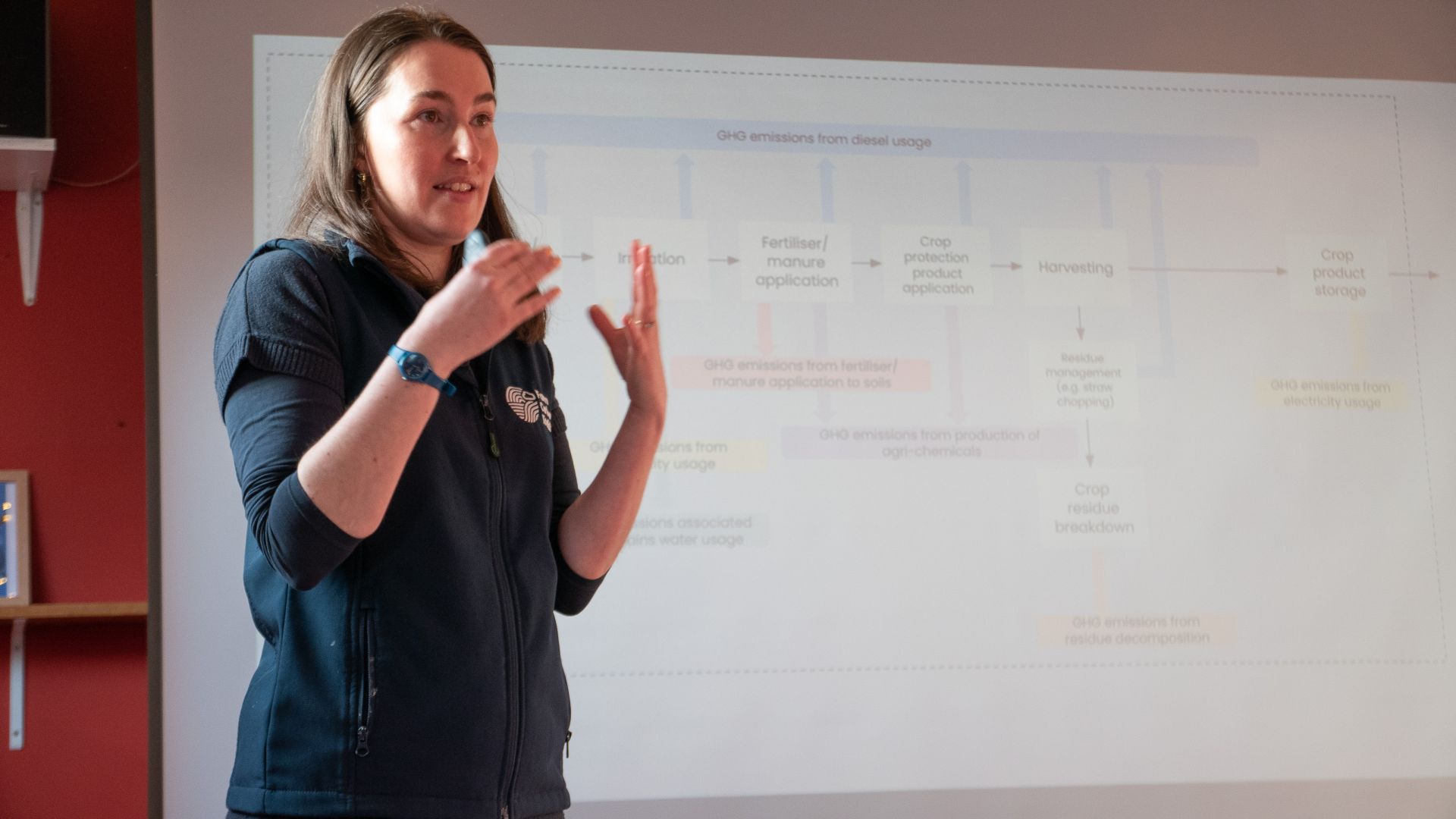
In Session 2, we demystify the maths behind the footprint. We compare the "Whole Farm" approach, which looks at the entire business over 12 months, with "Life Cycle Analysis" (LCA), which calculates emissions per unit of product, such as a tonne of wheat. You will learn how Global Warming Potential (GWP) allows us to convert different gases into a single figure for easy tracking.
Key Focus: Learning the fundamental calculation methodology.
This session provides a practical roadmap for data collection. We discuss how to set operational boundaries and where to find the most impactful data - often hidden in fuel invoices, spray records, and feed receipts. We also address the reality of "known unknowns," teaching you how to make sensible assumptions when data gaps exist to ensure the footprinting process can still move forward.
Key Focus: Preparing for an assessment and gathering high-quality evidence from existing farm records.
Measurement is only valuable if it leads to management. This session focuses on the "Four Pillars" of reduction: optimizing livestock/arable performance, managing soil and nutrients, improving energy efficiency, and maximizing sequestration. We look at how small changes - like adjusting tyre pressures or introducing herbal leys - can have a significant impact on both the carbon balance and the bottom line.
Key Focus: Turning report data into a multi-year action plan for emissions reduction and carbon storage.
In this session we look to evaluate the tools themselves. With over 200 tools available globally, we help you identify the "essentials," such as alignment with the GHG Protocol and robust data privacy.
Key Focus: Selecting appropriate software and using it effectively.
We conclude by looking at "Data Quality Scores," which help you and your clients understand the level of uncertainty in a report, ensuring that the final output is used as a credible document for future decision-making.
Key Focus: Interpreting the reliability of the results from carbon assessment tools.
Learners are encouraged to complete the assessment online to gain accreditation and be able to show your knowledge to others.
Write your awesome label here.
The course has been designed for farm advisers, consultants, researchers and others who are creating carbon assessments, or carbon footprints of different types within and across the supply chain. It is ideal for those looking for a practical understanding of the decisions needed to create and act upon carbon footprints within agriculture. No previous experience or qualifications are required to complete this course.
This course may be used as a precursor to our
BASIS certificate in GHGs, Carbon and Climate change mitigation - which is taught over 5 days in-person and online. A discount may be offered if you want to progress to this course, so contact us to confirm.